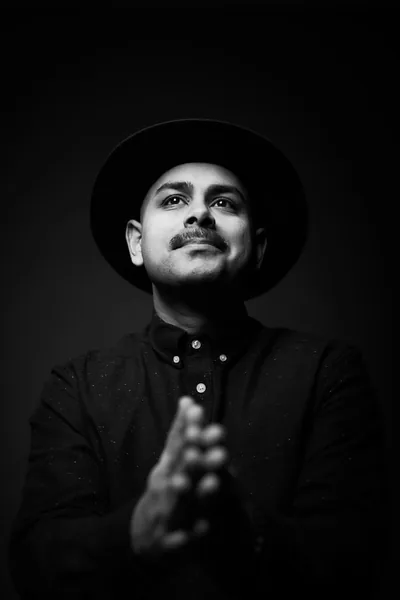
Adil Dhalla
Speaker Slam® Alumni

Adil Dhalla

Executive Director, CSI

About

Adil Dhalla

Executive Director of the Centre for Social Innovation, supporting 2,000+ social mission organizations. Chair of the StopGap Foundation and co-founder of Camp Reset.

On Stage

2 Speeches at Speaker Slam®

Identity · 2019

Discovering My Roots in India: A Journey to Belonging

Jul 2, 2019Lula Lounge · Toronto

Speaking on the theme Identity at Speaker Slam® in Toronto on Jul 2, 2019, Adil Dhalla took the stage with a five minute story.

Transcript

I haven't felt like I belonged for most of my life I was born here in Canada my parents are from Tanzania and my ancestors from India and growing up here in Canada most of the image images that I saw in our Western media of our athletes of our actors and of our leaders didn't look like me in fact the most prominent person in the media that I could relate to was Appu from The Simpsons more of a punchline than a point of pride I was reminded of my difference every time I shared the fact that I was Muslim and particularly after events like 9/11 the

vich world became worse people called me names and told me to go back to wherever I came from and I felt that same fear that same sense of exclusion every time I would go into a public space and particularly when I get on a bus and no one ever sat beside me I took that pain and I changed who I was I wasn't comfortable with who the world saw me as for years I modified my existence I never would have worn clothes that resembled my Indian or Muslim heritage for years when people couldn't pronounce my name which is odd Oh which means just in Arabic

I accepted what they could say I dill a deal dill pickle and I even changed how I looked I dyed my hair when I had it I used to wear color contacts and probably worst of all I used to bleach my skin so I could look a little bit whiter the challenge when you keep trying to modify your identity is that you kind of forget who you were when you started and I had forgotten and particularly in a world where were instructed to be ourself and to be authentic I carried the shame of not knowing who self was but man I wanted to know so

what I did about six months ago is I said goodbye to my life as I knew it I jumped on a plane I left my job and I went to India I wanted to go to where my ancestors were from because I felt that there was an answer there I also wanted to face the discomfort of one of the biggest things that I had hidden from my identity my entire life one of the first things that I learned was that India the stories that I learned here were not matching the stories that I was experiencing there it wasn't an underdeveloped civilization it was a great

ancient civilization the home to yoga and Hinduism and Buddhism and ahimsa and cannabis and more I connected to cows i sat with Babu's the smell of the food tantalized me but I also met people who told me you know because you're Muslim you should probably not tell people that because of the rising religious tensions and then I had other people who tell me but where are you actually from when I told them where my ancestors were from I was kind of devastated even in India I didn't feel like I had a place and then one day I met a man in the mountains in Rishikesh

now he was an old man but if you could picture this a young Yoda looking man he was small in stature but big in presence he had his eternally brown eyes and whiskers growing from different parts of his face he had lived in mud huts and ashrams and meditated every day and every night that we were together we sat on a fire after dinner and I got to ask him questions one night I asked him a nun what do you want and he said in that kind of Indian wago nothing I said how could you not want anything and he said the thing is when

you want things represents something that you're missing and I never want to come from that place and so I asked him well then how does anything happen for you and he says that's easy I just be the thing I want I don't want love I am love I don't want joy I am joy I don't want connection I am connection and so he turns to me and he says well what do you want I told him I wanted to belong and he said well Adele can you be belonging can you belong to yourself and what was amazing for me in that moment was realizing I

had flown halfway across the world to come to India not to learn or to belong in India but to learn that I needed to belong to me first I learned that belonging to me meant that I had to turn down the volume of what people told me I should be and turn up the volume of who I knew I was I learned I learned in order to belong to myself I had to work with others on the stories and the systems that hold us down and don't let anyone fully belong to themselves and I learned that to belong to myself also meant that I could

be part of a community I could belong to it and at the same time I could do my own thing and just do me and those to do a letí's could exist my friends ultimately the world that I want to belong in is the world where I belong to my and that's where I am now thank you you

Transcript generated from the recording and lightly cleaned. Some names and wording may differ from the spoken speech.

Power of Community · 2018

Building Community Starts with Washing the Dishes

Sep 25, 2018Lula Lounge · Toronto

Speaking on the theme Power of Community at Speaker Slam® in Toronto on Sep 25, 2018, Adil Dhalla took the stage with a five minute story.

Transcript

it's an absolute pleasure and an honor to be here today amongst all of you I get to talk about community there's nothing I love more about community and as someone who's being part of community for all my life to have the stage today and share with you some of my observations about it is an absolute privilege so I appreciate your presence what I've learned about community over the years is that there are some communities and in all communities there are things that are different about them and that there are some things that all communities have in common in particular there's one thing in all the

communities that I've been in that are found routinely be a pain point and itch of frustration something that everyone has some beef about my friends I am talking about dirty dishes you're laughing because you've been there or you've made that happen you know that now I know you might be wondering this guy's talking about dishes but hear me out on this a little bit great communities are like a clean sink they only work when we all do the dishes and it's so important that we all do the dishes as that's just one minor way that we can show up in our community now I've learned

this in particular I've mentioned I've been part of many communities but in particular over the last eight years I be part of a community at the Center for social innovation first as a member and then most recently as a member of the staff where I've had a leadership position that had the opportunity to steward an animate the culture there and the thing that has come up more than any other issue in the community is people not doing the dishes so I would super fascinated about this and I've watched our progress over the years as to what has been happening here first we started off with

the sign that said please do the dishes didn't work then we got super Canadian passive-aggressive and we have another sign that said please do the dishes dot dot dot as if people knew where that was going then we got super aggressive and we had a sign that had Christopher Walken steely cold blue eyes look at you and say Christopher Walken wants you to do the dishes will you didn't really work what I did learn is what did work a few of our staff actually held a community Town Hall about this topic quite recently and that the topic was what to do about the dishes and

the solution that came to the front from that conversation was one that I would have never thought of before the solution was put rocks in the sink and you could take that by the way when you put rocks in the sink people don't want to put their dishes in there because there's a chance of it breaking and creating more work now what's the lesson in that communities thrive when we create space for people to co-create with them communities thrive when the solutions don't come from the few from the many and our sense of ownership over things like the dishes and beyond come when we're invited

to be part of the community and a solution now another story I have for you it comes what a couple years ago a woman came up to me and she was indignant and I thought what could this be about and she came up to me and she said somebody improperly look at the dishwasher and I remembered in that moment a story that someone shared with me once where they told me that their family didn't have a dishwasher going up because they couldn't afford one and I relate that to that woman's experience because what I've noticed in healthy communities is that the sink always has multiple

ways to wash the dishes and the reason why that's important is because we have different experiences different privileges different ways that were brought up and accordingly communities find multiple ways for us to access the tools and services within it the third thing I want to share is this a story but more an admission I've left my dishes out before I've done it some times it was in a rush sometimes I was actually just lazy I apologize but you know what's so interesting the dishes always get done why I believe the reason why the dishes always get done is because in every community there is people

doing labor on behalf of others in every community there's people who are doing invisible labor some time that is manual something that is emotional they're not just cleaning our dishes they're taking care of us but not just taking care of us they're holding space for others that we've heard I want you to know if you're one of those people I appreciate what you have done and I know the best way that I can honor what you have done for me is by washing my dishes so my friends I'm gonna take a leap of faith and I want to assume that all of you want to

be part of healthy happy harmonious communities if you do I want you to say yeah let's try this again if you want to be part of a healthy happy and harmonious community let's hear you say yeah that felt good help me finish the sentence healthy communities are like a clean sink they only work when we all wash the thank you so much

Transcript generated from the recording and lightly cleaned. Some names and wording may differ from the spoken speech.

One Speech Can Change Your Life

Adil is one of the speakers who have told their story on the Speaker Slam® stage since 2016. The next one could be you.

Apply to CompeteAll Alumni