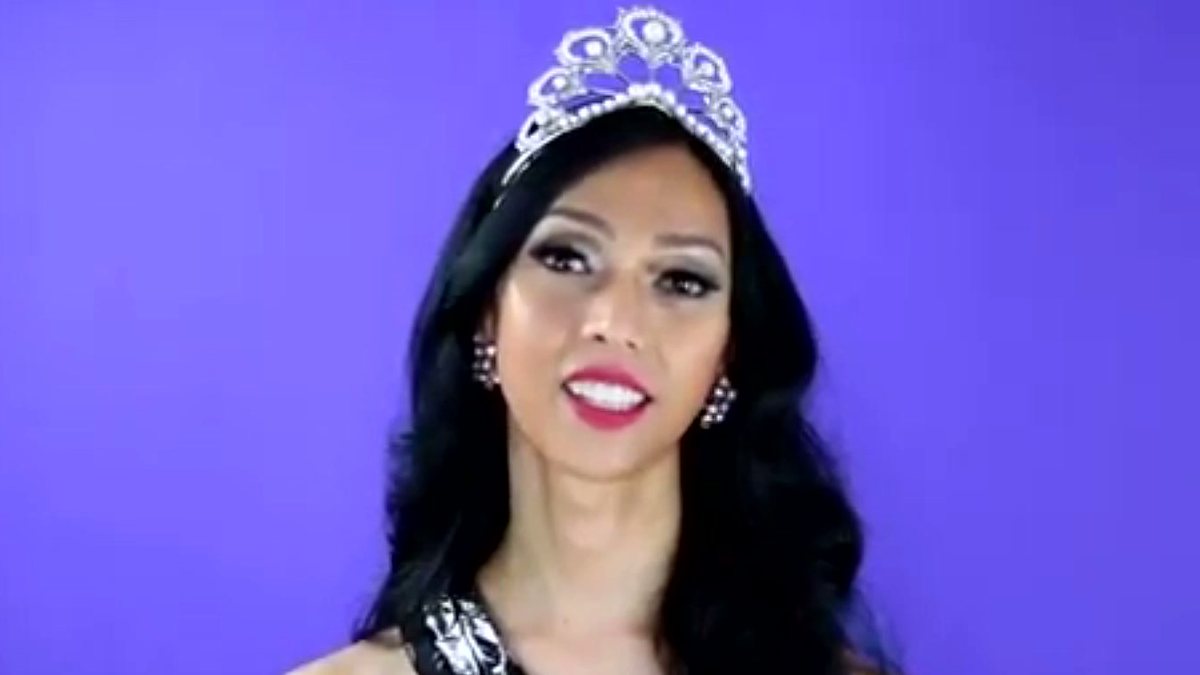
Julie Papango has set up a hospital laboratory in a refugee camp, and she has been turned away at a consulate desk because of who she is. On June 18th, 2020, she put both stories into one speech.
The humanitarian aid worker and equality advocate placed third at Speaker Slam® Resilience 2020, the first competition ever held online by North America's largest inspirational speaking competition. Twelve finalists from Canada, the United States, Jerusalem and England competed.
Her speech was called "Be a P.R.I.N.C.E.S.S." She delivered it wearing a tiara, and she explained what the letters stand for in her first sentence.
A Laboratory Technologist Who Goes Where the Need Is
Julie is a clinical laboratory technologist who was born and raised in the Philippines. Her humanitarian work and her love of travel have taken her to every continent except Antarctica.
She describes herself as an equality advocate, and as someone who mixes miracles, mysteries and magic through poetry and art. In her speech she recalled friends telling her she could be a model instead of working in a lab. Her answer was, "I would rather be nerdy and help the needy."
Her road to the final began in the spring of 2020, when Speaker Slam® moved online and opened its applications to the world. Eighty-two speakers entered an open round on the theme of Kindness. Twelve moved on to the final, where each wrote a new speech on the theme of Resilience.
Be a P.R.I.N.C.E.S.S.
"I am a PRINCESS," Julie began. "Proven Resilient In Negativity And Crisis, Emerging Stronger And Stronger."
It was the mantra she repeated to herself in 2013, aboard a humanitarian aid helicopter on its way to a refugee camp in Gidel, South Sudan. Her job was to set up a working laboratory in a 60-bed hospital serving 60,000 refugees.
The conditions were hard. There were latrines, cold showers under the stars, scorching wind, monsoon mud and nightly checks for scorpions and snakes. Her greatest fear was a different one. "My main fear was if I can survive this kind of setting, being a transgender woman," she said.
She spoke plainly about what that fear means. "To be questioned of your identity. To be stripped of your dignity and humanity. This is the constant crusade the transgender people and other gender minorities face in our daily lives."
Julie finished the job in three months. She set up the laboratory, trained local staff and prepared to move on to her next project in Ethiopia. At the consulate, staff noticed that the gender marker on her documents did not match the one on her application. She told them she is a transgender woman. Five days later her visa was refused.
"That moment reminded me of those instances that I was stripped of a lot of opportunities, even though I'm very capable, just because of my gender identity," she said.
Her office filed the application again through another country, where no face-to-face interview was needed. The visa came through in two days, and she went on to Ethiopia.
"Resilience is being able to wake up in the morning with a purpose," she said, "and decide to continue on playing on that table, even though you think you're dealt with the wrong cards. Continue playing those cards."
The Resilience Podium
Resilience took place online on June 18th, 2020. Twelve finalists competed before a panel of judges that included Jully Black, Stu McLaren and Jane Atkinson, and a judge gave feedback after each speech.
- Orly Wahba, "If You Think You Can Do It... You Can"
- Ingrid Palmer, "A Man-ish Woman"
- Julie Papango, "Be a P.R.I.N.C.E.S.S."
For the full story of the night, see the Resilience 2020 recap and meet the twelve finalists.
Julie Papango's Speech: "Be a P.R.I.N.C.E.S.S."
Below is the transcript of Julie Papango's third-place speech from Speaker Slam® Resilience, held online on June 18, 2020.
I am a PRINCESS. Proven Resilient In Negativity And Crisis, Emerging Stronger And Stronger.
I am a princess. I am a princess.
This was the mantra I keep on playing in my head back in 2013. There I was, a few thousand feet above ground aboard a humanitarian aid helicopter, nauseated and exhausted from almost 24 hours of travel from Asia to Africa, wearing a headset, carrying only 10 kilograms of luggage and tons of anxiety.
In a few minutes, I will be landing in Gidel, South Sudan. The refugee camp I will call home for the next three months before I fly to Ethiopia on another project.
My main goal, to set up a fully functioning laboratory in a 60-bed capacity hospital for the 60,000 population of refugees. But my main fear was if I can survive this kind of setting, being a transgender woman.
Living in a refugee camp means that you're giving up all the convenience of your basic lifestyle. In Gidel, we only use latrines and shower under the stars with no hot water. Our breakfast would consist of digestive crackers, peanut butter and jam, and a report that at least two people died the night before from our hospital.
The sub-Saharan weather would create scorching winds and piles of dust. When the monsoon rain would bring muds that are way above your knees. At night, we were always told to check for scorpions and snakes before we go into our tents.
So imagine living in that kind of situation and having that constant fear for your safety. That if someone realize that you're transgender. That you can be killed by just being who you are.
To be questioned of your identity. To be stripped of your dignity and humanity. This is the constant crusade the transgender people and other gender minorities face in our daily lives.
I'm quite fortunate because I have this, what they call passing privileges. People can't really tell that I'm transgender unless I would disclose it to them or they would look at my documents.
And being 5'10, 122 pounds, my friends would just really tell me, "You know, instead of working in the laboratory, you can be just a model." And I would tell them, "No, thank you. I would rather be nerdy and help the needy."
Three months in Gidel was fast. I managed to set up the laboratory, train local staff, and now it's time for me to go to Ethiopia.
Being from the Philippines, I needed to apply for a visa. The process for the visa was smooth until the end, when the secretary was reviewing the visa and my application documents. She was a bit confused. She went to the consul, and in a few minutes they called me back.
Apparently what happened was, since my documents all states male in my gender marker, I used that in filing my application. However, when I was being interviewed by the consul, he changed it to female. So they were both confused and asking, "Why is it different?"
And I told him that I'm a transgender woman and I kind of changed my gender marker back home.
They didn't say anything other than for me to come back the next day. Which I did. The day after. And after five days, they finally told me that they cannot issue the visa because I don't have enough work documents. They stripped the visa from my passport, gave it back to me, and I went home.
That moment reminded me of those instances that I was stripped of a lot of opportunities, even though I'm very capable, just because of my gender identity.
When I went home, my office told me to submit again my application in our South Korea office, so they would file it to the Ethiopian consulate in Seoul. Because I didn't need to go on a face-to-face interview, I was given the visa in two days and eventually managed to go to Ethiopia.
My resilience helped me survive that discrimination, the refugee camp, and finally help those refugees.
Because resilience is the fuel that would guide us towards stereotypes, prejudice and discrimination. Resilience create miracles, change mindsets and corrects mistakes. And resilience is being able to wake up in the morning with a purpose, and decide to continue on playing on that table, even though you think you're dealt with the wrong cards.
Continue playing those cards.
Be a PRINCESS. Prove Resilience In Negativity And Crisis. Emerge Stronger and Stronger.

Julie Papango
Humanitarian Aid Worker, Clinical Laboratory Technologist, Equality Advocate
Julie Papango is a humanitarian aid worker, clinical laboratory technologist and equality advocate. She was born and raised in the Philippines, and her wanderlust and passion to serve have taken her to every continent except Antarctica.
She has tested the Coriolis effect in Uganda, seen the Northern Lights in Iceland, crossed the Arctic Circle and basked in the midnight sun in Alaska. She mixes miracles, mysteries and magic through poetry and art, and she loves Ethiopian food.