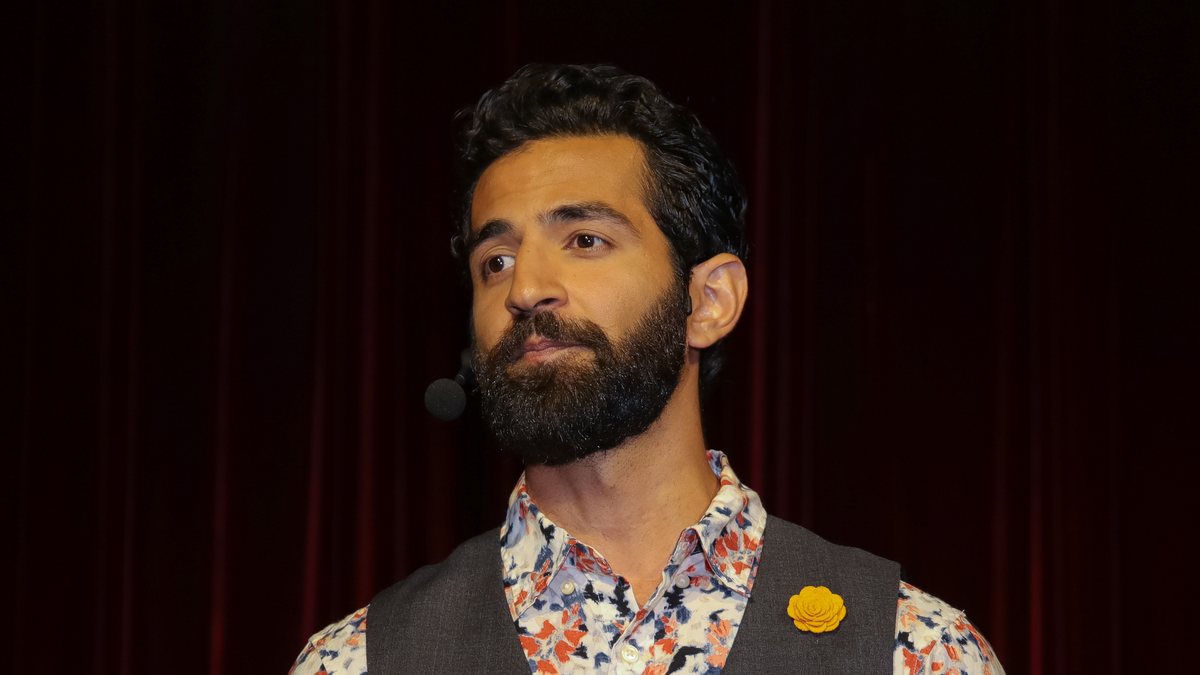
Seth Mohan dropped out of university at 21 to chase a business he believed would rescue his family from debt. It did not work. On July 31st, 2018, he told a Toronto audience why he would make the same choice again.
The entrepreneur, actor and YouTube creator placed third at Speaker Slam® No Risk, No Reward at Lula Lounge in Toronto, the fifth competition of the 2018 season of North America's largest inspirational speaking competition. His speech, "Gambatte," turned a story of failure into a lesson about what a reward really is.
It was his first time competing on the Speaker Slam® stage, and he left with a medal.
A Student of Life
Seth describes himself as a student of life who follows his curiosity. He shares health, fitness and lifestyle tips on his YouTube channel, The Kaizen Man.
He also works in the food service industry. Through his consultancy, Hospitality SOS, he brings his hospitality experience to restaurants.
On the night of the competition he had one more role to mention. He told the audience he was a working actor, and that he had shot a commercial that very morning.
Gambatte
Seth's speech opened with a show of hands. Who in the room knew what a pyramid scheme was? Who had been part of one?
Then he told them he had once been the person at the front of the room, selling the dream.
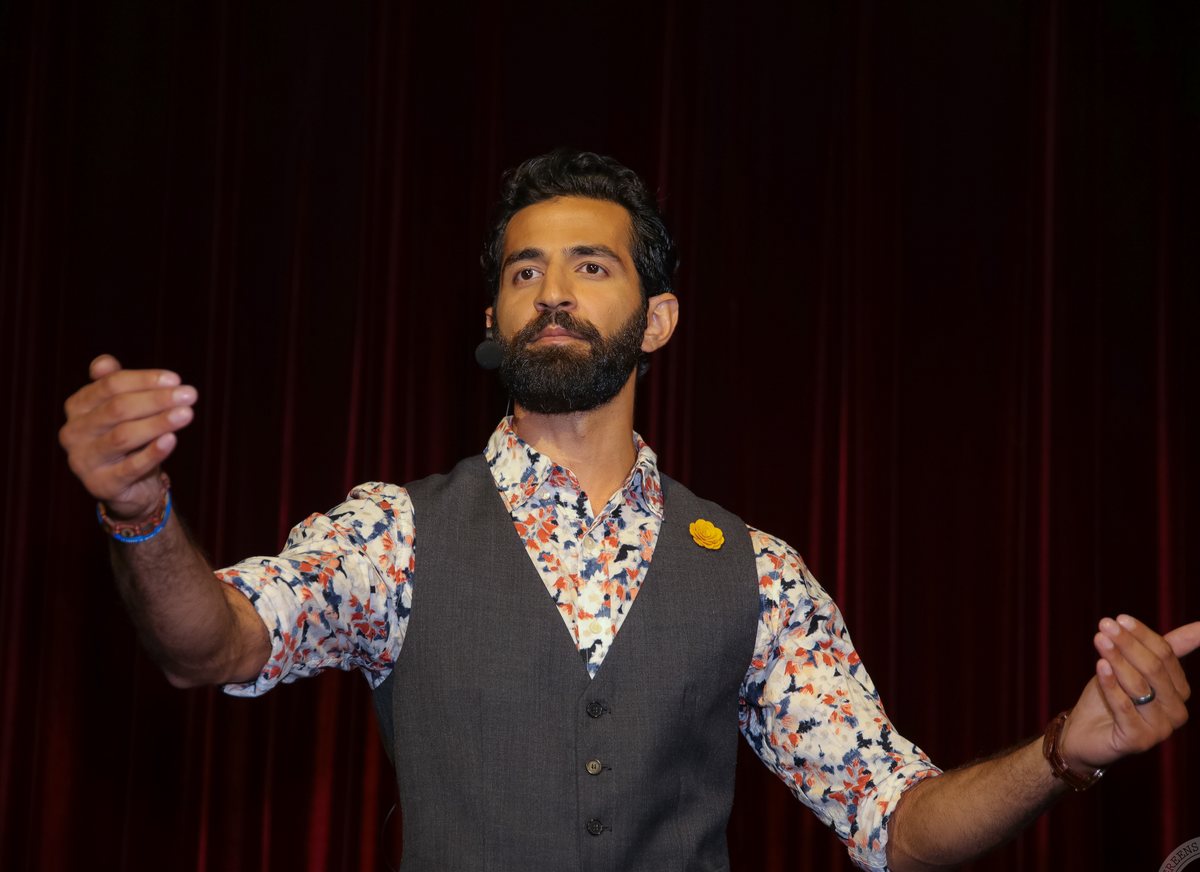
His family moved to Canada from India when he was 14. By the time he was 21, they were deep in debt. Seth was studying law and working retail for minimum wage when a phone call offered him a way to earn an extra $2,000 a month.
"I took the risk because the reward was right in front of me," he said.
Within months he had left university to work on the business full-time. He cold called every morning, looked for recruits every afternoon and ate dinner in his car on the way to evening sales appointments. He even earned a promotion. But he did not like who he was becoming, and after a year and a half he walked away.
"But wait, where's the happy ending?" he asked the room.
There was no rescue for his family's finances. What he found instead was experience. "Not many 22-year-olds have successfully failed at their own business," he said.
"Taking that risk forever changed my life," he said, "because I realized that if I can work this hard at something that I hate, I can work this hard at something that I love."
That realization became the heart of his message. Seth asked the audience to change what they count as a reward.
"What if reward was the growth that we experienced as a result of taking that risk and stepping outside of our comfort zone?"
He sent the audience off to give it their all, with the Japanese word that gave his speech its title. "Gambatte."
The No Risk, No Reward Podium
No Risk, No Reward took place on July 31st, 2018 at Lula Lounge in Toronto, hosted by Speaker Slam® co-founders Dan Shaikh and Rina Rovinelli. The speakers were scored by a panel of four judges, Andrea Sampson, Ron Tsang, Aaron Spivak and Dana Pharant.
- Ian Keeling, "The Unseen Reward"
- Sandra Elia, "On the Edge of Glory"
- Seth Mohan, "Gambatte"
For the full night, see the No Risk, No Reward 2018 recap.
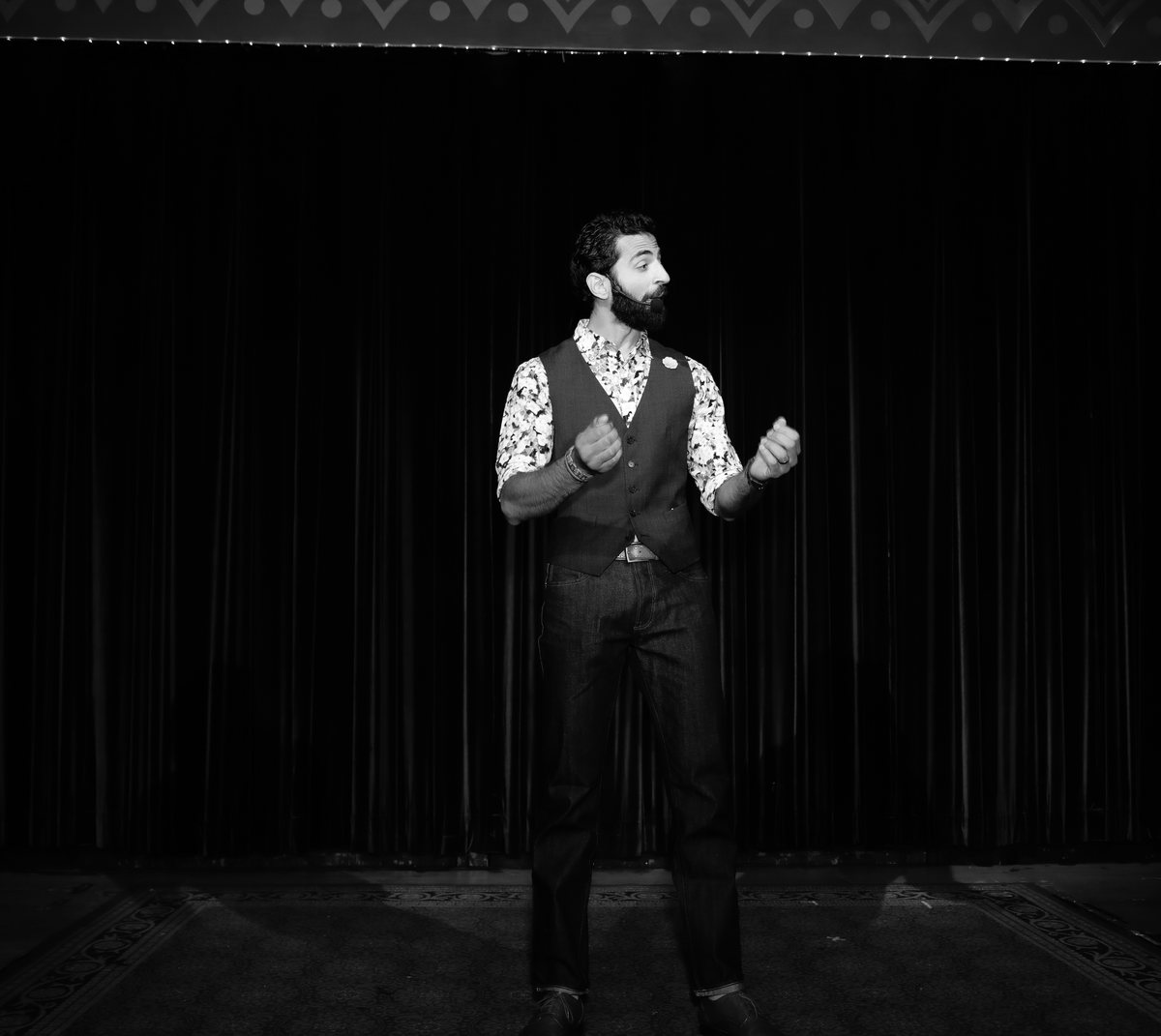
Seth Mohan's Speech: "Gambatte"
Below is the transcript of Seth Mohan's third-place speech, delivered live at Lula Lounge in Toronto on July 31, 2018.
So who here knows what a pyramid scheme is? Okay. And just out of curiosity, who here has been a part of a pyramid scheme? Okay. A few hands up. Awesome.
So for those of you who don't know, a pyramid scheme is a business where your friends or family recruit you, and then you go out and recruit your friends and sell them stuff. And these types of businesses usually have weekly meetings, and there's really friendly, excited people there. There's coffee in styrofoam cups and plastic folding chairs. And there's usually some kind of presentation where a guy or girl gets up and they tell you about how amazing and wonderful this company is, and how happy and successful they are to be part of this organization, and how you too can be just as happy and successful if you decide to join.
Well, guess what? I was the guy making that presentation. I was selling the dream of joining a pyramid scheme.
I see a bunch of you shaking your heads, and you're probably thinking, "You look like a decent guy. Why would you do such a thing?" Well, let me tell you why.
My family and I moved here when I was 14, from India. And we loved the life here. We bought into the consumer mindset, fell for the trap of easy credit and lived way beyond our means. By the time I was 21 years old, my family had racked up $100,000 of debt, and that was outside of our mortgage.
And like any good Indian kid, I was given the option of becoming a doctor or a lawyer, so I chose to pursue law. I was at the university at the time, learning about law and politics. And at home, I was learning about scary things like bankruptcy and consumer proposals. And I wanted to help my family get out of this financial mess. But I was working retail at the time, making minimum wage, and I was at least 10 years away from making a six-figure salary at a swanky law office.
Then one day I got a phone call. A man called saying he was a friend of a friend, and he was very excited. He wanted to tell me about this opportunity to make an extra $2,000 a month working part-time. I was intrigued. That was a lot of money for me back then. So I asked him, "How can I do that?" And he said, very confidently, "Just come to this meeting and everything will make sense."
I said okay and agreed to meet him. Next Tuesday, I drove all the way to Burlington and came for my very first meeting. And as they say, the rest is history. I joined the business that very night.
I saw an opportunity there to learn about financial services, help my family get out of debt, and also help other families like mine. It was a win-win situation, and I took the risk because the reward was right in front of me.
A few months later, I had dropped out of university and joined the business full-time. And I put myself on a strict schedule. I would cold call every day from 9 a.m. to 12 p.m. From 12 to 5, I would go prospecting for new recruits to join my business. In the evenings, I would eat dinner in my car while driving to sales appointments. This was my life as a 21-year-old.
And I saw success. I even got a promotion. But inside, I started hating myself. I hated the person I had become. Everyone that I met was a potential client or a potential recruit, and hopefully both.
And finally, after a year and a half, I quit. I realized that the dream I was chasing was an impossible one, and accepted my defeat.
But wait. Where's the happy ending? You guys thought that I would get up here and tell you about how I sold enough life insurance as a 22-year-old to save my family from bankruptcy. Well, sadly, that didn't happen. My family and I were broker than before.
But guess what did happen? I became rich. I became rich in experience. Not many 22-year-olds have successfully failed at their own business. While my friends were figuring out their plans for the weekend, I was out in the real world developing my business skills.
Taking that risk forever changed my life, because I realized that if I can work this hard at something that I hate, I can work this hard at something that I love.
And that was 10 years ago. Today, I have a popular YouTube channel. I'm a working actor. In fact, I shot a commercial this morning. And I don't tell you this to impress you, but rather to impress upon you that risk does have its rewards. But oftentimes, the rewards aren't what we think they're going to be.
We think reward is a successful outcome of taking a risk, and when that doesn't happen, we get frustrated. But what if we changed the meaning of reward? What if reward was the growth that we experienced as a result of taking that risk and stepping outside of our comfort zone?
This approach is known as being process-oriented. And I've used this approach in the last 10 years to make some of the biggest decisions in my life, that have led me to the highest highs and the lowest lows. But this approach has taken away the fear of failure, because I realized that success or failure is not dependent on the outcome, but rather in the growth that I experience as a result of taking that risk and expanding my comfort zone.
So if you are looking to make some changes, and perhaps take that risk that you know you want to, maybe this approach can make that decision a little bit easier.
So go forth and give it your all. And as the Japanese say, gambatte.

Seth Mohan
Entrepreneur & Speaker
Seth Mohan is a student of life who follows his curiosity with passion. He is the creator of The Kaizen Man, a YouTube channel sharing health, fitness and lifestyle tips.
Seth is also an entrepreneur in the food service space. Through his consultancy, Hospitality SOS, he shares his passion and hospitality experience with restaurants.