Earlier this month I spoke at Robb Gilbear's Do Bold Sh*t event. I've attended and spoken at it for the past three years. Before that came FemCity Toronto, the WEDO Toronto Summit, a Creative Mornings breakfast stage, a virtual summit, a handful of podcasts and a workshop at TEDxTorontoMetU with Dan Shaikh, my business partner and Speaker Slam® co-founder.
None of those stages fell from the sky.
I get asked the same question all the time by coaches, authors and experts all over the world: where do speaking opportunities actually come from? You know your message is good. You just can't find the rooms.
Here's the roadmap I share with the speakers I coach.
How Stages Really Lead to Stages
I've spent years watching this happen with speakers.
One opportunity leads to another.
One stage leads to an introduction.
That introduction leads to a booking.
That booking leads to a video.
That video gets seen by someone else.
I've lived it. Several years ago Dan introduced me to Ivan Wanis Ruiz. He recommended me to the University of Toronto, where I got to teach a speaking program. Later he recommended Dan and me for a paid speaking opportunity, and last fall I spoke on his Creative Mornings stage. One relationship, several stages.
So stop waiting for the perfect stage. Get on the next one.
Where Speaking Opportunities Come From
Speaking Competitions
A competition gives you a stage, an audience, a filmed talk and a reason for people to pay attention. Since 2016, Speaker Slam® has been that launch pad. Our live competitions happen in Toronto, with a livestream, and speakers are welcome from anywhere. Our judges are industry leaders, and their prizes often include mentorship and coaching, stage opportunities, press opportunities and book publishing.
Everyone wants to work with a winner. Event planners book winners. If you want to win, get to the front of the room.
TEDx
TEDx events are independently organized under a license from TED, so there's no single place to apply to speak. Each event runs its own speaker process. Some post an open application, some take nominations, and some curate by invitation only. Speakers are generally not paid, and the talk you give has to stand on one clear idea. Before you chase one, read what you need before a TEDx talk.
Industry Conferences and Association Events
This is where many paid speaking engagements and paid speaking opportunities live. Conferences and professional associations post a call for speakers months ahead. Read it like a job posting. Look at the theme, the audience, the session formats, the deadline and whether speakers are paid, comped or neither.
As an event organizer, I look at every single speaker in terms of the value they bring to the event. Once you find out what an organizer is looking for, you can position your application more powerfully.
Podcasts and Virtual Summits
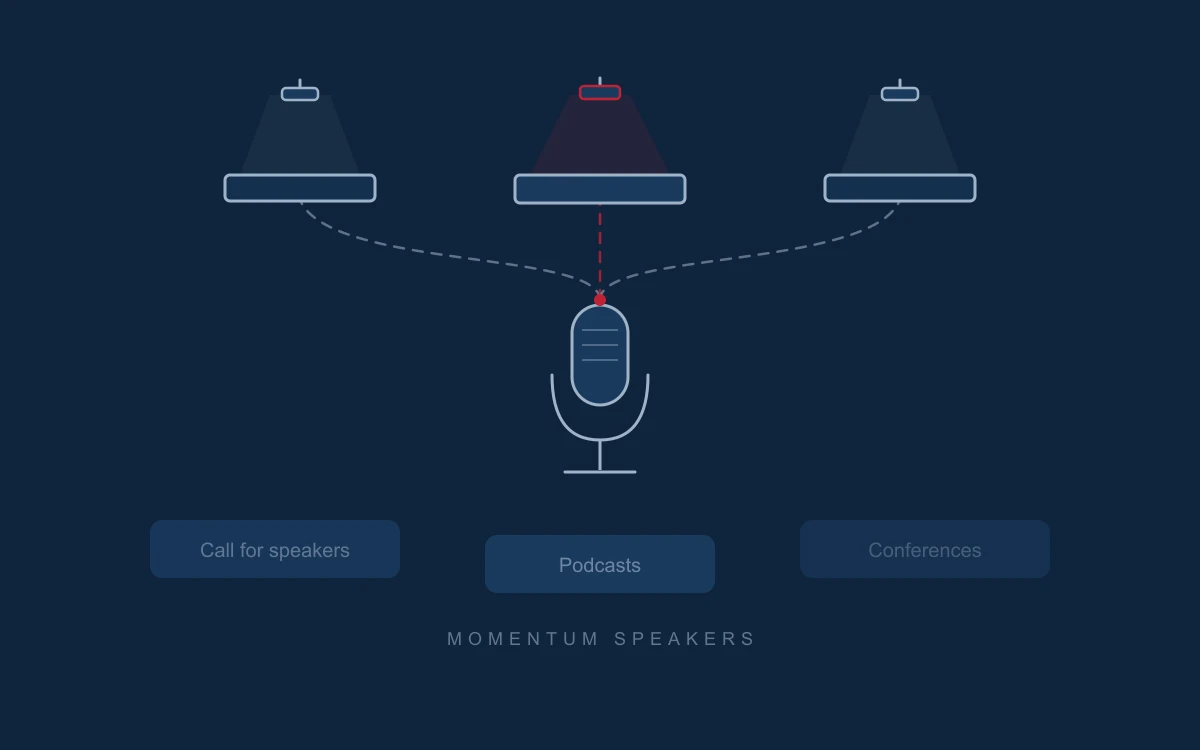
I often encourage our speakers to speak on podcasts as a means of building their brand and creating momentum in their life and business. I don't always take my own advice :) But every podcast and virtual summit I've done has given me content, credibility and new connections. Hosts are always looking for guests, and the bar to start is low.
Community, Nonprofit and Networking Events
Women's networking groups, business associations, chambers, charities and meetups all need speakers. My FemCity Toronto talk and my WEDO Toronto Summit keynote were stages like these. They're warm audiences, they're a great place to test material, and the people in them know other organizers.
Corporate Lunch-and-Learns and Internal Events
Companies run lunch-and-learns, wellness weeks, team offsites and internal conferences. Start with your own network: a former employer, a client, a friend in HR. Offer a 30 to 45 minute session that solves one problem for their team.
Create Your Own Stage
You don't have to wait to be chosen. Host a workshop, a panel or a small event. When I create events I make sure to add an ice breaker game or create activities where people have connection opportunities. The truth is, people want to be seen and heard. Run a room like that and you instantly become the person at the front of it.
Speaker Submission Platforms
There are speaker submission platforms that list calls for speakers and let you build a profile. They can save you time. But no platform can fix a fuzzy message. A strong positioning statement, a reel and a one-sheet matter far more than where you apply. I've said it for years: you'll need your Speaker One Sheet and your Speaker Reel to be successful as a speaker, regardless of where you wish to speak. Here's what makes a great speaker reel.
How Event Planners Find Speakers
Planners find speakers through referrals, past attendees, bureaus, social media, search and the speakers they've already seen on other stages. That last one is why visibility matters so much.
Event planners don't book "inspiring speakers."
They book solutions.
If your pitch says you help "everyone," you're competing with every leadership speaker and mindset coach out there. Event planners don't book "general." They book specific solutions to specific problems.
How to Pitch Event Organizers
What to send. Keep it short. Who you are, the specific problem your talk solves, who it's for, two or three talk titles, a link to your reel and one-sheet, and one line of credibility. Tailor it to that event's theme and audience.
Make the host's job easy. Give them a ready-made introduction. One of my Speaker Faux Pas: repeating your bio right after someone has just introduced you. If you want to share your journey or highlight your credentials, then provide the host with an introduction that will allow you to share without being repetitive.
Follow up once, kindly. If you don't hear back in a week or two, send a short note. Then move on to the next organizer.
Be a good guest. I've been running events for 20 years. Organizers remember who shows up, who promotes the event and who makes their day easier. Etiquette is part of your reputation.
Free vs Paid Stages
Dan and I have always had a passion for helping speakers move from "great speaker to paid speaker." That's a process that starts with building a strong foundation and then moving into free and low paying speaking opportunities to build testimonials, credibility, experience and personal brand, and then finally into the life of a professional speaker.
Free stages are an investment. Make each one pay you back in a testimonial, footage or an introduction.
I believe paid speaking is 80% marketing. It's about leverage. It's taking a win and building upon it.
Paid speaking gigs don't go to the best-kept secret.
They go to the speaker with a brand, a bio, and a buzz.
When you're ready to charge, here's how to get paid speaking gigs.
A Quick Word on Pay-to-Speak
Some events will offer you a stage for a fee. Sometimes that's a fair sponsorship package. Sometimes it isn't. Before you hand over a credit card, read should you pay to speak at a conference and know exactly what you're buying.
Momentum Moves You to the Front of the Line
For anyone who is a speaker, it's important to build momentum in your life. That momentum becomes the energy that moves you to the front of the line for speaking opportunities. Get on podcasts, write blogs, get press, and put yourself in the spotlight, even if it's uncomfortable.
So which stage are you going to go after first?
Keep reading: What Event Planners Actually Look for When Booking a Speaker · 3 Personal Branding Mistakes Experts Make (and How to Fix Them)
Your Next Step
If you want a stage, a filmed talk, expert judges and a community cheering you on, this is where so many of our speakers started. Our competitions are live in Toronto with a livestream, and speakers are welcome from anywhere.