I'm going to say something that might sound strange coming from someone who teaches public speaking.
Your team probably doesn't need another presentation skills workshop.
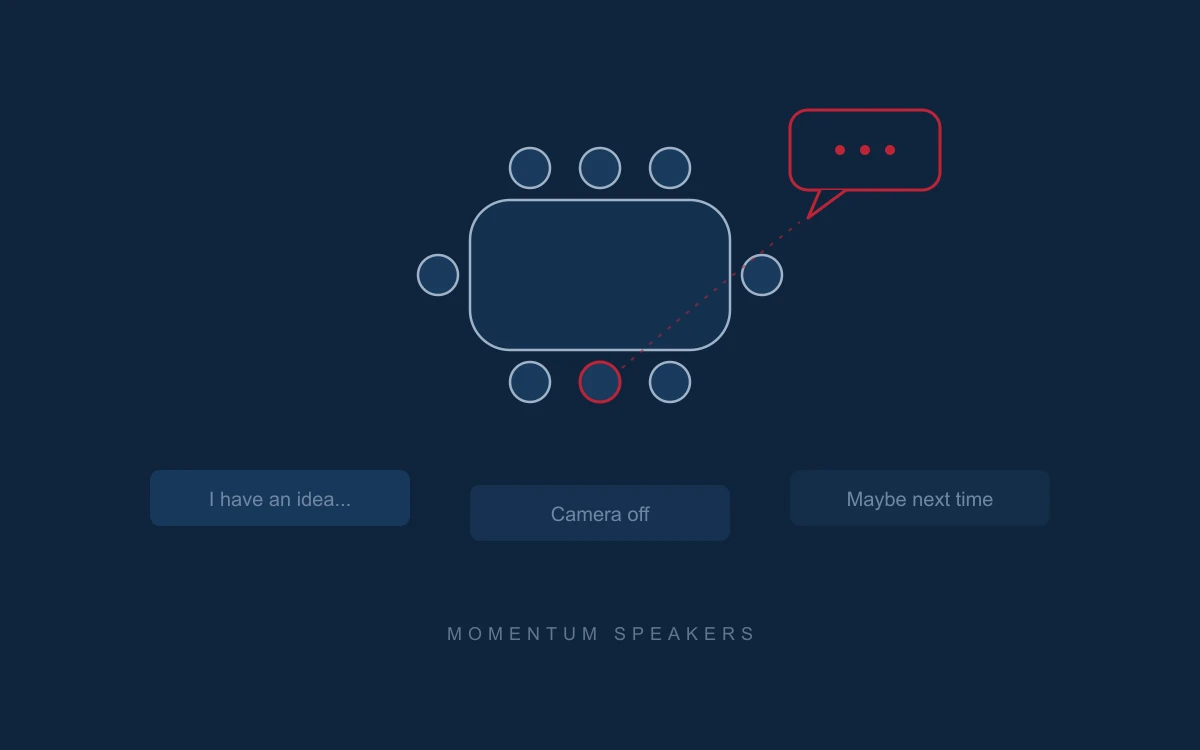
You have seen it in every meeting. A smart, capable person with plenty to say sits quietly while the same three voices fill the room. Later, in the hallway or a private message, they share the idea that would have changed the whole conversation. By then the decision has been made.
Most organizations respond by booking a training on slide structure, eye contact and body language. It helps a little. Then the next meeting looks exactly like the last one. That is because the reason employees don't speak up in meetings is almost never technique.
Presentation Skills Are the Final Piece of the Puzzle
Public speaking is the number one fear for many people. Speaking up at work is that same fear wearing business clothes.
Since 2016, Dan Shaikh and I have put people on the Speaker Slam® stage to share their stories, and I now bring that work into organizations through Command the Room. While many people believe they need help with presentation skills, the truth is, that's the final piece of the puzzle.
As someone who trains speakers, I can tell you it goes much deeper. Employees are struggling with their own limiting beliefs, their fear of being seen, or feeling undeserving of being heard.
Read that list again and notice that none of it shows up on a performance review. A team member can be excellent at their job and still carry a quiet belief that their opinion doesn't count, that they will be judged, or that someone more senior has already thought of it. Teach that person slide design and you have solved a problem they don't have.
And the cost is real. When people stay quiet, you lose innovation and creativity, engagement and morale drop, and the culture slowly turns toxic.
The Signals HR Leaders Miss
Silence in meetings is one symptom. There are others, and they usually show up long before anyone names the problem.
Cameras off on video calls. One camera off is a bad connection. A whole team with cameras off is telling you something about how safe it feels to be seen.
Jokes where honesty should be. Humor is welcome on any team. Humor used to dodge every serious moment is a defense.
Ideas that arrive after the meeting. If good thinking keeps landing in direct messages and one-on-ones, the ideas exist. The room is what is blocking them.
The same voices every time. When anyone on the team could predict the speaking order, the quieter people have already decided their contribution won't change the outcome.
Why Psychological Safety Has to Come First
Psychological safety gets talked about a lot in HR, but the idea behind it is practical: people speak when they believe speaking won't cost them.
Everything we do at Speaker Slam® is built on one belief. The foundation of our brand is that people want to be seen and heard. That is true on a stage, and it is just as true around a boardroom table.
But being seen comes before being heard. If a training program opens by asking people to stand up and present in front of colleagues they don't yet trust, it is asking for courage before it has earned it. People will perform, joke or hide.
Start with connection. The honest sharing follows.
What Actually Helps Employees Speak Up
If you want your employees to command the room, support them in building confidence, reconnecting with their why, and feeling valued and appreciated.
That's the foundation of powerful communication. Here is how it looks in practice.
1. Build Connection Before Asking for Courage
Open with low-stakes sharing. Introductions with one personal detail, conversations in pairs before the full room, small wins before big ones.
And make it interactive from the first minute. If you know me, you know that in my sessions YOU will be speaking, and sharing, and envisioning. Nobody gets to sit in the back and watch. When everyone shares a little early, nobody feels singled out later.
2. Reconnect People With Their Why
Employees speak up more when they remember why the work matters to them personally. That is why I teach story before I teach delivery. When someone can tell the story of the moment that brought them to this work, and what it taught them, something shifts.
It can sound far removed from a Tuesday staff meeting. In practice, a person who can say out loud why they do this work finds it much easier to say what they think about how the work gets done. Story is the heart of inspirational speaking, and I explain why it works so well in inspirational vs motivational speaking.
3. Make People Feel Valued and Appreciated
Years ago, when I worked as an operations manager at a digital recruitment firm, I had a boss with an amazing skill for recognition. He knew exactly what would make each person on his team feel seen. He once gave me an Employee of the Century plaque made from the construction debris of a renovation I had overseen, because he knew I loved validation. I showed that thing off to everyone.
Recognition and validation play a huge role in how people feel about their work. That's why our corporate training combines impactful communication with a connected company culture.
We put the "human" back into human resources.
Thank people specifically. Credit ideas to the person who raised them. Follow up on what was said. People who see their input acted on give more of it.
4. Practice Speaking in a Safe Room First
Confidence comes from repetition. Short impromptu exercises work beautifully: one easy question, no notes, and a minute to answer and expand. Everyone takes a turn and nobody is graded on the answer.
Encourage people to look up and connect rather than read. Notes become a wall between the speaker and the room, which I cover in how to memorize a speech without sounding robotic.
5. Give Quiet People Room to Take Up Space
People who feel they don't belong in the conversation tend to rush through it, apologize, or not start at all.
Be loud and proud. You deserve to be seen and heard!
That is what I tell my speakers, and leaders can say the same thing with their actions in meetings. Invite quieter voices by name, give them room to finish, and don't let the loudest person fill the pause.
The Confidence Carries Into Everything Else
I know what it feels like to want the spotlight and fight for it. Dan and I met at a local Toastmasters group, and at first we competed for the center of attention, until we realized we were more powerful together. Speaking changed how both of us showed up in every other part of our lives.
I have watched the same thing happen on the Speaker Slam® stage again and again since 2016. The person who finds their voice in front of an audience brings it to the next meeting, the next difficult conversation and the next idea they would once have kept to themselves.
Momentum begins at the front of the room.
So here is my question for you: who on your team has the best idea in the room and hasn't said it yet?
Keep reading: How to Prepare Employees for Public Speaking at a Company Event · How to Get Over Stage Fright: What Experienced Speakers Do Differently · Why Human Storytelling Matters More in the Age of AI
Your Next Step
If your team has the talent but your meetings don't show it, look underneath the presentation skills. Command the Room builds connection, confidence and story first, then gives people the tools to stand up and be heard.